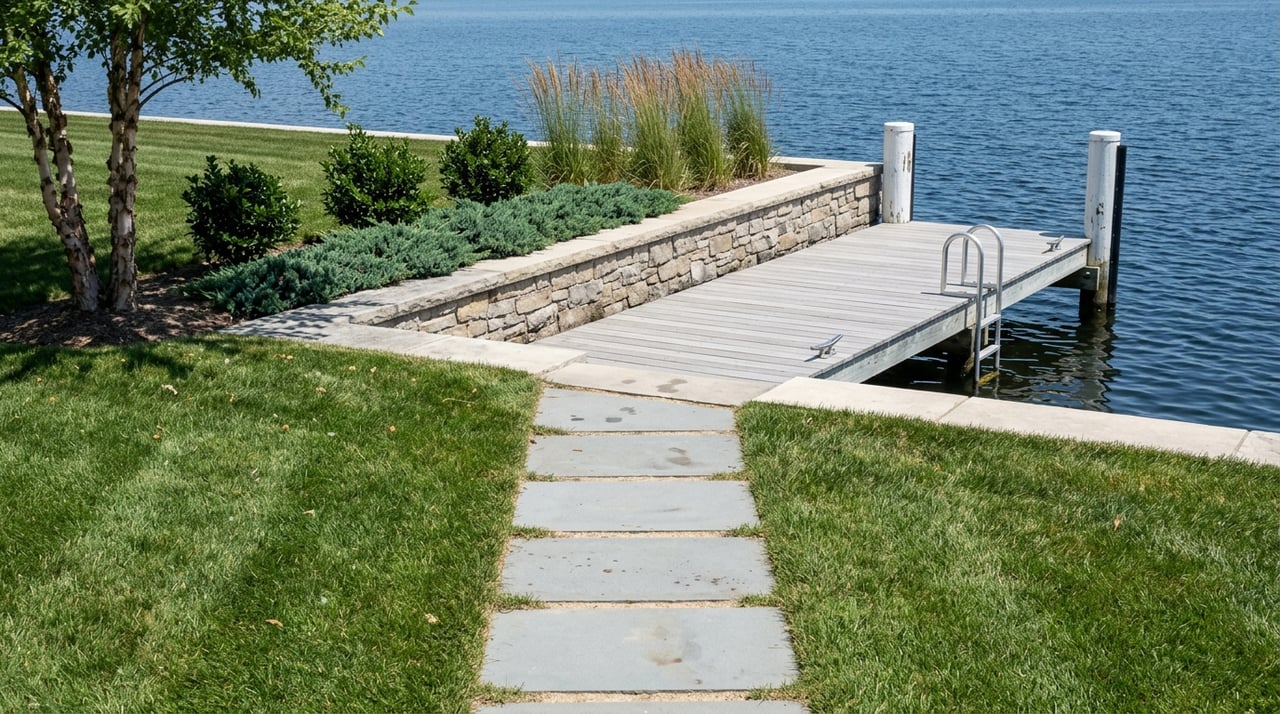
If you are dreaming about a second home on Lake Macatawa, it helps to know that waterfront ownership here is rarely just about the house. In Macatawa, you are often buying a mix of shoreline, dock rights, access, seasonal convenience, and local rules that can shape how you use the property. When you understand those details early, you can shop with more confidence and avoid expensive surprises later. Let’s dive in.
Why Macatawa Feels Different
Macatawa is not a one-size-fits-all waterfront market. The area has resort roots, and the Historic Ottawa Beach Society notes that Ottawa Beach was platted in 1886 with cottage lots, common park areas, and a hotel site, with summer cottages already built by 1890.
That history still matters today. Some properties feel like classic seasonal cottages on compact lots, while others live more like year-round waterfront homes or larger estates. In some nearby historic cottage areas, access may be on foot rather than by a typical street, which can affect parking, unloading, and everyday convenience.
For a second-home buyer, that means the right fit is not only about price or square footage. It is also about how you plan to use the home, how often you will visit, and how easy the property will be to manage in every season.
Start With How You Want To Use It
Before you fall in love with a view, think about your real lifestyle needs. Some buyers want direct dock access for frequent boating, while others are happy using a marina slip or a public launch nearby.
In the Macatawa area, nearby public boating access helps shape those choices. Michigan DNR says Holland State Park includes a Lake Macatawa unit, with a boat launch about one mile east on Ottawa Beach Road. Ottawa County Parks says Ottawa Beach Marina operates from April 15 through October 31 and offers transient slips, seasonal slips, and moorings.
That means two waterfront homes with similar views may serve very different buyers. One may work best for someone who wants to keep a boat at the property, while another may still be a great second home if you plan to rely on the marina or public launch.
Dock Rights Need A Closer Look
One of the biggest mistakes second-home buyers make is assuming that a waterfront address automatically means simple dock use. On Lake Macatawa, that is not always the case.
Michigan EGLE says its Inland Lakes and Streams Program oversees projects such as dredging, filling, structure placement on bottomlands, marina work, and other actions that alter natural flow. EGLE also identifies docks, piers, boat wells, boat hoists, boat lifts, boardwalks, fences, and decks as common regulated projects.
In practical terms, you should treat dock rights and shoreline improvements as a due diligence item, not a given. An existing dock does not always answer every question, and future changes may follow a different review path depending on the scope of the work.
Township Rules Matter Too
State review is only part of the picture. Township zoning can be just as important in determining what you can do with a Macatawa waterfront parcel.
Park Township’s ordinance limits docks serving single-family and two-family homes to four moored boats or watercraft at any time. It also limits non-owner watercraft to 72 consecutive hours and states that accessory buildings may not be placed between the principal building and the water’s edge.
Holland Charter Township also has Lake Macatawa-specific rules. Its zoning ordinance measures lake-side setback from a traverse line in certain areas and includes 90-foot and 50-foot setback examples for some neighborhoods. It also says recreational equipment on waterfront lots must be stored at least 40 feet from the water’s edge.
For you as a buyer, the lesson is simple. A lot can look perfect on paper and still have meaningful limits on storage, setbacks, building placement, or waterfront use.
Boating Convenience Is Not The Same Everywhere
If boating is part of your second-home vision, the shoreline itself is only one piece of the experience. Watercraft rules can affect how quickly and easily you get out on the lake.
The Michigan DNR lists slow-no wake zones on Lake Macatawa in Park Township, Holland Charter Township, and the City of Holland. In some areas, boats under 26 feet must stay at slow-no wake within 300 feet of shore, dock, or pierhead, while larger boats may have a 600-foot restriction.
That does not make a property less attractive, but it can affect day-to-day use. If you expect frequent outings, entertain boating guests, or plan to use a larger vessel, these practical limits are worth understanding before you buy.
Think Beyond Summer
Macatawa shines in the warm season, but second-home ownership here is shaped by a clear winter-summer split. NOAA monthly normals for Holland Tulip City Airport show a January mean temperature of 25.9°F and a July mean of 71.6°F, along with 34.76 inches of annual precipitation.
That climate matters if the home will sit empty for stretches of time. You will want to pay close attention to heating, insulation, plumbing protection, driveway access, and how easy the home is to maintain when you are away.
The area’s cottage history reinforces that point. The Historic Ottawa Beach Society describes the neighborhood as a summertime resort setting, and notes that some streets are really concrete sidewalks or boardwalks rather than conventional roads.
For some buyers, that charm is exactly the appeal. For others, it raises practical questions about carrying supplies, winter access, service calls, or off-season upkeep.
Seasonal Storage Can Affect Daily Use
Second-home buyers often focus on the fun parts first, like sunsets, patios, and boat days. Just as important are the simple storage questions that shape how easy the property feels in real life.
Park Township’s ordinance says that from November 1 through the end of February, boats, boat trailers, portable docks, shore stations, and similar items in residential districts must be stored behind the front building line or at least 100 feet back from the street right-of-way. That can be easy on some parcels and more challenging on others.
If you own multiple watercraft or plan to keep equipment onsite, ask early where those items can legally go. This is especially important on smaller lots or properties with unusual access.
What Usually Drives Value
Waterfront pricing can vary sharply, even between homes that appear similar at first glance. Broader waterfront research helps explain why.
Zillow found an average waterfront premium of 36 percent compared with comparable inland homes in the period it studied. A peer-reviewed spatial valuation study also found that the ability to build and use a dock created a statistically significant premium of almost 45 percent compared with waterfront properties that could not practically support docking.
Those are not Macatawa-specific numbers, but they offer useful context. In Macatawa, value is often shaped by direct frontage, usable dock rights, view corridor, lot shape, year-round functionality, property condition, and how much usable space remains after setbacks and shoreline rules are considered.
That is why a smaller lot with strong dock usability may command serious attention, while a larger lot with a beautiful view but limited practical water access may appeal to a different buyer pool. Looking at the lot on a map is not enough. You need to understand how the property works in real life.
Questions To Ask Before You Buy
The smartest second-home buyers ask detailed questions early. That helps you narrow the field before you invest time, inspections, and emotion into the wrong property.
Here are a few questions worth asking:
- Which township governs the parcel, and what waterfront-specific zoning rules apply?
- Is there an existing dock, and how many boats can legally moor there?
- Has any shoreline work, dredging, seawall work, or dock-related improvement been permitted through EGLE?
- Are there setback, erosion, flooding, or high-water considerations that affect future plans?
- Can the home function comfortably year-round, or is it better suited for summer use?
- If private docking is limited, how close are Ottawa Beach Marina and the Holland State Park launch?
- Where can boats, trailers, and seasonal equipment be stored during the off-season?
These questions are not meant to complicate your search. They help you buy with clarity, especially if you are purchasing from out of town and need the home to be easy to own.
A Macatawa waterfront home can be an incredible second-home purchase when the property matches your lifestyle, boating habits, and seasonal expectations. If you want a local guide who can help you look past the photos and focus on how a waterfront property actually lives, connect with Suzanne Bladek for a private consultation.
FAQs
What makes Macatawa waterfront homes different from other lake homes?
- Macatawa properties often combine house, shoreline, dock considerations, access details, and seasonal-use factors, so buyers need to evaluate more than just the home itself.
What should second-home buyers ask about Lake Macatawa docks?
- You should ask whether there is an existing dock, what use is allowed, whether EGLE permits were involved, and what township rules apply to mooring and future improvements.
What are the boating rules buyers should know on Lake Macatawa?
- Lake Macatawa includes slow-no wake zones in Park Township, Holland Charter Township, and the City of Holland, with distance limits from shore, docks, and pierheads depending on boat size.
What seasonal issues matter for Macatawa second homes?
- Winter temperatures, precipitation, vacancy periods, heating systems, plumbing protection, driveway access, and off-season maintenance are all important for a second-home purchase.
What public boating options are near Macatawa waterfront homes?
- Holland State Park has a Lake Macatawa unit with nearby boat launch access, and Ottawa Beach Marina offers transient slips, seasonal slips, and moorings during its operating season.
What local zoning issues should buyers review for Macatawa waterfront property?
- Buyers should confirm which township governs the parcel and review lake-side setbacks, accessory-building limits, equipment storage rules, and any lot-specific nonconforming provisions.