Thinking about buying a home in Saugatuck or Douglas and using it as a short-term rental? It can be a smart way to support your second-home goals, but the rules are not something you want to figure out after closing. In these two neighboring markets, the details that matter most are permits, zoning, occupancy, and whether an approval survives a sale. Let’s walk through the basics so you know what to verify before you make a move.
What counts as a short-term rental?
In both Saugatuck and Douglas, a short-term rental is generally a dwelling rented for fewer than 31 consecutive days, or advertised for stays of 30 days or less. That means even if a property looks like a strong vacation rental candidate, you still need to confirm whether it meets the city’s local requirements.
For you as a buyer, the key point is simple: an address alone does not tell the full story. The zoning district, permit status, and city approval process all affect whether a property can legally operate as a short-term rental.
Saugatuck short-term rental basics
Saugatuck uses a citywide licensing model, and it has more detailed operating rules than many buyers expect. If you want to use a home there as a short-term rental, a city STR license is required.
The city lists an annual license fee of $540 and a $175 reinspection fee. Licenses are valid for one year, and the city also requires an annual fire inspection.
What Saugatuck requires
The application packet asks for several property-specific items, including:
- Owner and local agent contact information
- A floor plan
- Proposed occupancy
- A parking layout
- A fire checklist
- Proof of rental insurance
This is one reason short-term rental due diligence in Saugatuck should go beyond a quick online search. You want to know whether the property can satisfy these requirements before you count on rental income.
Saugatuck occupancy rules
Saugatuck uses a clear occupancy formula. The city allows:
- Two occupants per bedroom
- Plus two additional occupants per finished floor
- Up to a maximum of 12 overnight occupants
The city also allows visitors up to 1.5 times the overnight occupant count, but only between 7:00 a.m. and 11:00 p.m. These rules can directly affect how you evaluate a home’s rental potential, especially if you are comparing properties with different bedroom counts or finished lower levels.
Saugatuck operating limits to know
Saugatuck’s ordinance includes several operating rules that matter for buyers and owners. For example, the city requires good-neighbor materials that address noise, trash, parking, and occupancy.
The ordinance also bans:
- Room-by-room rentals
- Tents or campers as sleeping space
- Fireworks
Rental property insurance must also be maintained at all times. If you are considering a property with outdoor gathering space or extra guest accommodations, it is important to evaluate those features through the lens of the ordinance, not just lifestyle appeal.
Saugatuck district caps can change the picture
One of the biggest issues in Saugatuck is the district cap system. The city caps STR licenses in six R-1 subdistricts, including Community Residential R-1, Peninsula West R-1, Maple Street R-1, Peninsula South R-1, Peninsula North (Duneside) R-1, and Peninsula North (Riverside) R-1.
When one of these districts reaches its cap, the city stops accepting additional applications there until a license becomes available. If a license does open up, available licenses are issued through a random lottery.
For you, that means a beautiful home in Saugatuck may still have limited short-term rental potential if it sits in a capped district. The city notes that it is still accepting applications in other zoning districts that permit STRs, so location within the city matters a great deal.
ADUs in Saugatuck work differently
Accessory dwelling units, or ADUs, are a special case in Saugatuck. The city says ADUs are allowed on residential lots with an existing single-family home, and they are not counted toward the STR caps.
That can be meaningful if you are looking at a property with a guest cottage or other secondary living space. In some cases, the ADU can be licensed when the primary home and ADU are rented together under one short-term rental contract.
If the ADU is rented separately while the owner occupies the main home, special land use approval from the Planning Commission is required. This is an area where property setup can materially affect the path forward.
Saugatuck licenses do not transfer automatically
This is one of the most important points for buyers. In Saugatuck, STR licenses are non-transferable and become void on an attempted transfer of the property, although the city intends to grandfather previously issued certificates until they expire.
In practical terms, you should not assume the seller’s license carries over after closing. If rental income is part of your purchase strategy, this issue deserves early attention.
Douglas short-term rental basics
Douglas is generally more permissive from a zoning standpoint, but it still requires formal approval before any short-term rental can operate. The zoning ordinance allows STRs in all zoning districts where residential use is permitted by right or by special land use, but the property must be registered and have a valid rental occupancy permit.
That makes Douglas less about broad district caps and more about property-specific approval. A home may appear eligible, but you still need to verify the permit path and operating conditions.
What Douglas requires
Public city materials state that properties intended for rental must be inspected by the Fire Department. The city’s short-term rental packet also says the owner must register the unit and obtain a valid rental occupancy permit.
The city forms ask for details such as:
- Bedroom count
- How many the home sleeps
- Off-street parking spaces
- Fire Department maximum occupancy
This tells you something important as a buyer. In Douglas, the actual occupancy number appears to be established through the approval process for the individual property rather than through one simple citywide published formula.
Douglas inspection timing should be confirmed
Douglas public materials are not perfectly aligned on inspection timing. One city packet says the unit must be inspected at least every 36 months, while a newer zoning ordinance document says the Fire Department inspects annually before a rental occupancy certificate is issued.
The clear takeaway is that inspection is mandatory. If you are buying with rental plans in mind, it is wise to confirm the current inspection cadence directly with the city before relying on older materials.
Douglas also limits how rentals operate
Like Saugatuck, Douglas allows whole-house rentals to groups not defined as a family, but it prohibits renting individual rooms. That means a traditional room-by-room setup is not the approved model.
Douglas also gives the city a clear enforcement tool. A rental occupancy certificate can be revoked after more than one code violation in a calendar year.
Douglas approvals also end with a sale
Another major point for buyers is transferability. In Douglas, any sale or transfer of the property makes the existing certificate null and void, and the next owner must file a new application.
If you are comparing homes based on their rental history, that history may still be useful context, but it is not the same thing as having approval in place after you take title. As in Saugatuck, you should treat the approval process as part of your purchase analysis.
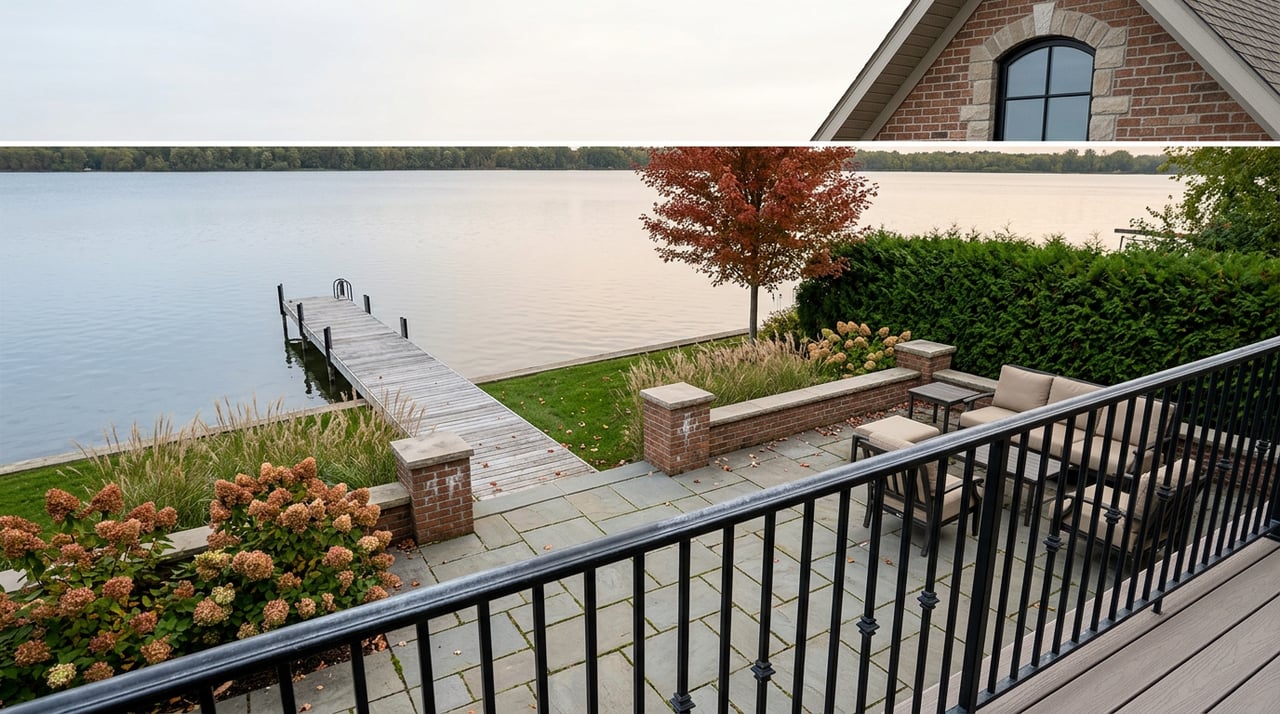
Waterfront homes add another layer
In these lakeshore communities, waterfront and near-water properties often come with added appeal. They can also come with added rules.
A water view, dock, or shoreline location does not replace short-term rental requirements. Instead, it adds another layer of regulation that can affect cost, timing, and what improvements are realistic.
Waterfront rules in Saugatuck
In Saugatuck, major waterfront construction requires a city permit. The code defines major construction to include commercial waterfront structures and any pier or dock more than 45 feet from the ordinary high water mark.
The city also limits residential parcels to one pier or dock. In addition, water-oriented districts such as the Neighborhood Marine District and Downtown Waterfront Preservation District are designed to preserve water access and shoreline views.
Waterfront rules in Douglas
Douglas has separate shoreline rules for waterfront parcels. The zoning code creates a 30-foot shoreline protection strip along certain waterfront lots, and it limits what can be placed in that strip to items such as docks, boat ramps, pump houses, and walkways.
The ordinance also states that all waterfront development must comply with the City Waterfront Construction Ordinance #101. For some waterfront lots, recreational equipment such as boats and trailers also has special parking and storage rules, including a 50-foot-from-water-edge rule for certain items.
Five things to verify before you buy
If you are underwriting rental income in Saugatuck or Douglas, a careful review upfront can save you time and disappointment later. Before you rely on projected short-term rental use, make sure you confirm these five items:
- The exact zoning district
- Whether the property currently has a valid STR license or certificate
- Whether that approval survives a sale
- The Fire Department-approved occupancy number
- Whether any waterfront or dock work needs separate permits
In Saugatuck, district caps and ADU rules can materially affect value and use. In Douglas, zoning may be broader, but occupancy approval and inspection requirements still shape what is realistic for a specific property.
Why local guidance matters
Short-term rental rules can look straightforward at first glance, but the real impact often shows up in the details. A capped district, a non-transferable license, a property-specific occupancy limit, or a shoreline restriction can all change how a home fits your goals.
If you are buying a second home or waterfront property in Saugatuck or Douglas, it helps to work with someone who understands how these local rules intersect with the purchase process. That way, you can evaluate the opportunity with clear eyes before you commit.
If you want help sorting through a specific property, market area, or waterfront purchase strategy, reach out to Suzanne Bladek for a private consultation.
FAQs
What is considered a short-term rental in Saugatuck and Douglas?
- In both cities, a short-term rental is generally a dwelling rented for fewer than 31 consecutive days, or advertised for 30 days or less.
Do you need a license for a short-term rental in Saugatuck?
- Yes. Saugatuck requires a city short-term rental license, along with annual renewal, an annual fire inspection, and application materials such as a floor plan, parking layout, and proof of rental insurance.
Are short-term rentals allowed everywhere in Douglas?
- Douglas allows short-term rentals in zoning districts where residential use is permitted by right or by special land use, but the property must still be registered and have a valid rental occupancy permit.
Can a Saugatuck short-term rental license transfer to a new owner?
- No. Saugatuck short-term rental licenses are non-transferable and become void on an attempted transfer of the property.
Does a Douglas rental occupancy certificate transfer after closing?
- No. In Douglas, a sale or transfer makes the existing certificate null and void, and the new owner must apply again.
Are room-by-room rentals allowed in Saugatuck or Douglas?
- No. Both cities allow whole-house rentals but prohibit renting individual rooms.
How does Saugatuck set occupancy for short-term rentals?
- Saugatuck uses a formula of two occupants per bedroom, plus two additional occupants per finished floor, with a maximum of 12 overnight occupants.
Do waterfront homes in Saugatuck or Douglas have extra rules?
- Yes. Waterfront and near-water parcels may have separate shoreline, dock, storage, or construction rules that apply in addition to short-term rental requirements.