Looking for lake life without the full waterfront price tag? If you’ve been eyeing Saugatuck and Douglas, you’ve likely seen listings that promise “deeded lake access.” It sounds great, but it can mean very different things from one property to the next. In this guide, you’ll learn what deeded access actually includes, how it compares to association access and true waterfront, and what to review before you write an offer. Let’s dive in.
What deeded access means in Michigan
“Deeded lake access” is a recorded property right that lets you use a specific path, beach, dock area, or shoreline feature. The right lives in a recorded instrument such as a deed, a plat dedication, a stand‑alone easement, or condominium documents. It usually takes the form of an easement appurtenant, which means it benefits the property and transfers when you sell.
The exact words in the deed or easement control your use. Some easements allow only walking access. Others allow improvements like stairs or a dock, subject to approvals. You may see phrases like “ingress, egress, and recreation,” “non‑exclusive easement,” or “exclusive easement granted to Lots 1–5.” Each phrase has a practical impact on how you can use the shoreline.
You’ll also hear about riparian and littoral rights in Michigan. These rights attach to waterfront parcels and are different from a back‑lot deeded access. If your property is not directly on the water, you typically do not hold riparian or littoral rights. Your access is defined by the easement’s language, local rules, and state regulations.
Access types compared
Deeded access (lot‑specific easement)
- Scope is defined by the recorded instrument. It can be exclusive to a few lots or shared among many.
- Use and improvements depend on the language. Do not assume docks, parking, or boat launches are included.
- Experience is often a short walk or stairway to the water, with lower cost than true waterfront.
Shared association access (HOA or condo)
- Access and amenities are governed by the association’s declaration, bylaws, rules, and budgets.
- You may see common beaches, parking, shared docks, or assigned slips. Use is tied to membership and rules.
- Expect regular dues for maintenance and possible special assessments for larger projects.
Private waterfront (riparian/littoral ownership)
- Your parcel touches the shoreline, and you hold riparian or littoral rights, subject to permits and public trust rules.
- You have the most control over your shoreline use and the highest price point.
- With control comes responsibility for maintenance and compliance with state and local permits.
How use and value are affected
Use and enjoyment
What you can do at the water depends on the documents. An easement that only allows “ingress and egress” usually means walking access, not docking or motorized launching. Some documents limit hours, guests, or motorized watercraft. The terrain matters too. A steep path or a 200‑yard walk feels different from a short, improved stairway with handrails.
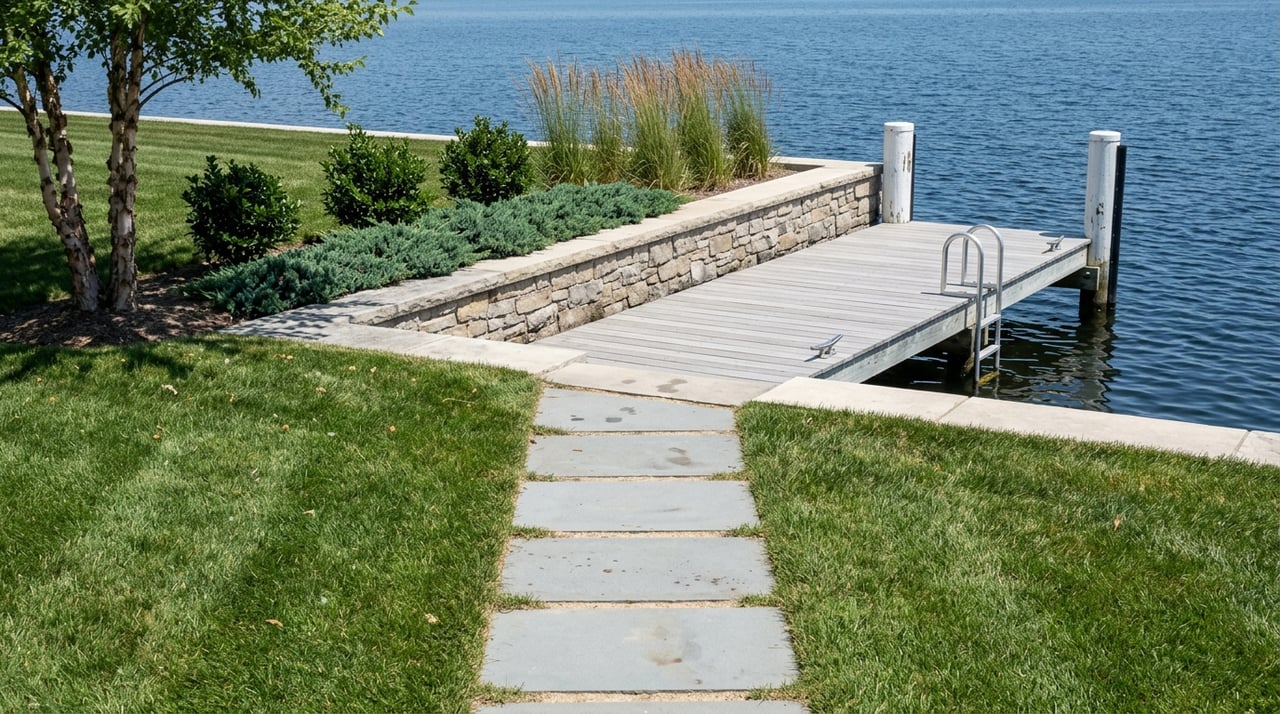
Improvements like docks, lifts, and stairs often require written consent from those who control the land where the access sits, plus state and local permits. If your goal is a boat slip or long‑term mooring, confirm in writing that the documents allow it and that permits are feasible.
Value and marketability
Homes with deeded access usually sell for more than similar homes with no access, but less than true waterfront. The size of that premium depends on exclusivity, quality of the access, and local demand. In Saugatuck and Douglas, waterfront demand is high, so well‑documented access can be a real selling point.
Restrictions or uncertainty can cut the other way. Vague language, unclear parking, or disputes over docks can deter buyers. Clear documents, visible improvements in good condition, and a stable maintenance plan tend to support value.
Liability and insurance
Access comes with responsibility. If you or an association control or maintain a path, stairs, beach, or dock, there can be liability for injuries. Many homeowner policies need endorsements for docks, lifts, or watercraft exposure. Flood risk depends on your property’s elevation and flood zone. Associations typically carry insurance for common areas, but you should verify limits, deductibles, and whether loss assessments can be passed to owners.
Saugatuck/Douglas local context
Where records live
In Allegan County, deed, easement, and plat records are kept by the county Register of Deeds. Plats for Saugatuck, Douglas, and nearby subdivisions may show dedicated beach parcels, park lots, or recorded easements. A recent survey can confirm where the access lies and how you reach it from your lot.
Shoreline permits and rules
Structures like docks, piers, and seawalls are regulated by the Michigan Department of Environment, Great Lakes, and Energy. Work near the ordinary high‑water mark on Lake Michigan typically requires permits. The City of Saugatuck, City of Douglas, Saugatuck Township, and Allegan County also enforce zoning and building rules for shoreland stairs, retaining walls, and parking. You should expect to talk with both state and local offices before adding or modifying improvements.
Michigan’s public trust doctrine protects the Great Lakes shoreline below the ordinary high‑water mark. A deeded access easement can get you to the shore, but it does not override public trust protections.
Launching and docking
Public boat launches exist around the region, which is often the simplest path for trailered boats. Private launching at a deeded access is commonly limited or prohibited unless the documents clearly allow it and the site can support it. When in doubt, assume you will use public launches or association‑assigned slips rather than creating your own.
Due diligence checklist for buyers
Documents to review
- Recorded deed for the property, noting any grants or reservations of easements
- Title commitment and all easement instruments referenced in the title work
- Recorded plat and plat notes that reference “beach,” “common area,” or “private access”
- Current survey showing easement location, width, and distances to water
- HOA or condo documents, including declaration, bylaws, rules, budgets, reserve studies, insurance, minutes, and recent assessments
- Permits and approvals for existing stairs, docks, parking, and shoreline protection
- Seller disclosures and any statements about how the access has been used and maintained
Key questions to answer
- Who owns the land where the access sits, and who can use it?
- Is use exclusive to a small group or non‑exclusive among many owners?
- What activities are permitted, and are guests allowed?
- Are improvements like docks or stairs allowed, and what approvals are needed?
- Who maintains the area, how are costs shared, and what insurance is in place?
- Is parking defined, and is it adequate for how you plan to use the access?
- Are there time limits, quiet hours, or seasonal rules?
- Have there been disputes, liens, or litigation tied to the access?
Who to consult
- Title company for commitments, exceptions, and endorsements
- Real estate attorney to interpret easements and association documents
- Professional surveyor to stake or map the easement route and dimensions
- Local planning, zoning, and building officials for permits and compliance
- An insurance agent who understands waterfront exposures
- HOA or association manager for budgets, reserves, and rules
Red flags to watch
- Vague language like “access to the water” without a defined route or use
- No recorded maintenance agreement for shared access
- Mismatch between the plat, the deed, and the physical path on the ground
- Docks or stairs with no clear owner, no permits, or unclear maintenance
- Unfunded reserves or recent disputes in HOA minutes
- Easements that can be revoked or that terminate if unused
Real‑world examples to frame expectations
- A small group of five back‑lot homes shares a narrow footpath to the shore. The easement allows walking access only. Value uplift is real, but docks are not allowed and parking is limited to on‑street.
- A condominium association maintains a sizable beach, paved parking, and assigned dock slips. Dues are higher, but maintenance and insurance are centralized, and rules are predictable.
- A platted common area says “ingress and egress” with no mention of structures. Owners enjoy beach days and sunsets, but dock requests are declined because the language does not permit them and permits would be required.
How to shop smarter in Saugatuck/Douglas
Start with your lifestyle goals. If your top priority is casual beach days, a deeded footpath may be perfect. If you want a dock or slip, focus on association communities that already provide them or on true waterfront. Always confirm the documents match your plans, then check what state and local permits would require in practice.
The Saugatuck and Douglas market is competitive, and buyer expectations are high. A well‑written offer will often include time for a title and document review, a survey if needed, and calls to local officials about permits. When you approach deeded access with clear eyes and the right team, you can secure a great lakeshore lifestyle at a more attainable price point.
Ready to explore options?
If you want lake access without full waterfront pricing, it pays to have a local guide who knows the difference between a footpath, a true beach lot, and an association with real slip inventory. For boutique, high‑touch representation in Saugatuck, Douglas, and the West Michigan lakeshore, reach out to Suzanne Bladek. Contact Capt'n Sue for a private consultation.
FAQs
What is deeded lake access in Saugatuck/Douglas?
- It is a recorded property right that lets your parcel use a specified path, beach, or shoreline area, with terms defined in the deed, plat, or easement.
How is deeded access different from an HOA beach?
- Deeded access is defined by the easement language for your lot, while HOA access is governed by association documents, rules, and dues for members.
Can I add a dock with deeded access on Lake Michigan?
- Only if the easement allows it and you secure all required state and local permits; many deeded access easements do not permit docks.
Who maintains a shared beach or access path?
- The recorded documents control maintenance and cost sharing; in associations the HOA usually handles it through dues and budgets.
How does deeded access impact insurance needs?
- You may need endorsements for docks or watercraft liability, and you should review flood risk, while associations typically insure common areas.
Where do I find Allegan County records for access rights?
- Begin with the Allegan County Register of Deeds for recorded deeds, plats, and easements, then review a current survey and title commitment.
What red flags should I watch for before making an offer?
- Vague easement language, unclear maintenance duties, unpermitted docks or stairs, unfunded HOA reserves, or easements that can be revoked are key warnings.