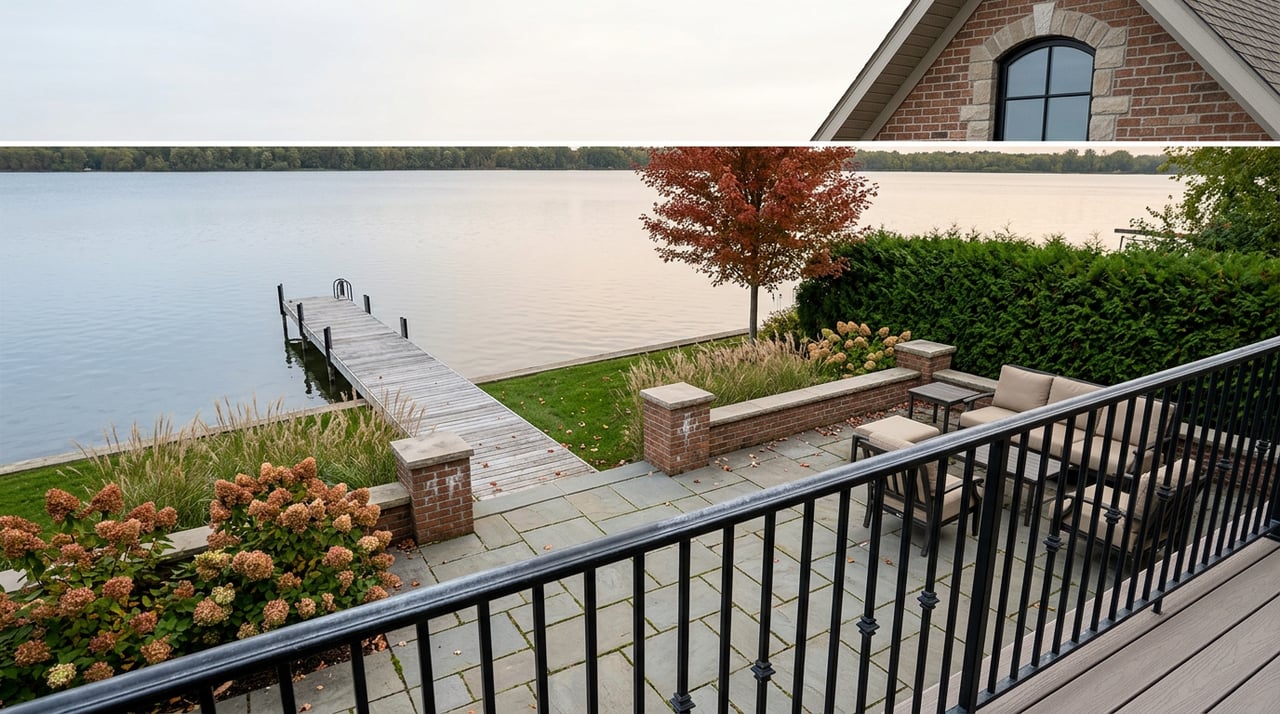
You spot “deeded lake access” on a Saugatuck or Douglas listing and picture sunset walks and easy boat days. But not all access means the same thing once you read the fine print. You want both the lifestyle and the legal clarity so there are no surprises after closing. In this guide, you’ll learn what deeded access actually means here in Allegan County, how it compares to other options, what to verify, and how it can affect usability, costs, and value. Let’s dive in.
What deeded access means
Deeded access is a recorded legal right to reach and use shoreline or water that transfers with the property. It is written into your deed or a recorded instrument that runs with the land. The exact rights depend on how the access is structured and described.
Common forms you’ll see:
- Fee simple to the waterline. You own the land to the ordinary high water mark. This is the most complete form of access.
- Easement appurtenant. A recorded right attached to your lot that allows use of a defined strip, path, or beach area. It typically transfers with the property.
- Shared or association ownership. An HOA or condo association owns the shoreline or launch and grants member use under recorded covenants and rules.
- Easement in gross. A personal right not tied to a parcel. This is less common for residential shoreline access.
Key terms you’ll encounter
- Littoral vs. riparian. In Michigan, littoral often refers to lake frontage and riparian to river or stream frontage. People use them interchangeably, so confirm what the deed says.
- Ordinary High Water Mark (OHWM). The legal benchmark for where private ownership meets the water’s edge.
- Exclusive vs. non-exclusive. Some easements grant exclusive use to defined owners. Others are shared with many owners or the public.
How it differs from other access
- Deeded easement vs. “shared frontage.” A recorded easement spells out who can use it, when, and how. Informal sharing between neighbors can change or be disputed.
- Association or neighborhood launch. You get amenities like docks, launches, and parking, but your use is governed by recorded rules, dues, and possible special assessments.
- Public parks and launches. These guarantee access regardless of your deed, but traffic and activity are higher and privacy is lower.
- Owning to the waterline vs. just a path. Owning to the waterline gives more control. A right-of-way may allow foot access only and no control over the shoreline itself.
Practical impacts:
- Docks and piers. You may need deeded ownership to the shore or specific dock rights in the easement, plus local and state permits.
- Parking. Some easements allow parking; others are footpaths only. Check the language.
- Privacy. Exclusive rights offer more privacy. Large shared rights can bring more activity.
Saugatuck/Douglas factors to consider
The Saugatuck and Douglas area includes Lake Michigan shoreline, the Kalamazoo River and Saugatuck Harbor, and smaller inland lakes and ponds. Each waterbody can involve different rules and user patterns.
Local controls to check:
- Shoreline and dune protection near Lake Michigan. Critical dune and vegetation rules can affect stairs, decks, and beach work.
- Zoning and setbacks. City of Saugatuck, Village of Douglas, and nearby townships such as Saugatuck Township and Laketown Township set building, lot coverage, and septic rules.
- Dock, seawall, and shoreline permits. State-level permits are commonly required for new shoreline work. Great Lakes activity is often more regulated than inland lakes.
- Boat and speed rules on inland lakes. Some lakes have local horsepower or speed limits.
Local context to keep in mind:
- Public amenities. Popular parks and beaches increase activity near private access points.
- Seasonality. Lake Michigan water levels, rip currents, and winter ice can change access and usability through the year.
What to verify before you buy
Request these documents:
- Recorded deed with the legal description and any easement references
- Recorded easement instrument(s) spelling out scope, exclusivity, and maintenance
- Plat map and any dedication language if the property is in a plat
- Current survey showing the easement, boundaries, OHWM, and encroachments
- Title commitment and copies of all recorded exceptions
- HOA/condo CC&Rs, bylaws, rules, meeting minutes, budgets, and assessments
- Permits and surveys for existing docks, lifts, seawalls, and stairways
- Tax parcel records and recent tax bills
- Maintenance agreements or cost-sharing contracts for access areas
- Seller disclosures and any history of disputes
What to look for:
- Exact location and size. Width and start/stop points of the access strip
- Users and exclusivity. Which lots may use it and whether it runs with the land
- Maintenance and costs. Who pays, how decisions are made, and how special assessments are handled
- Improvements and restrictions. Dock rights, seasonal limits, boat size, and guest policies
- Parking and vehicles. Whether cars, trailers, or guests are allowed
- Transferability and revocation. Conditions that could change or end your rights
Professionals to involve:
- Title company. Review the commitment and secure title insurance
- Real estate attorney. Interpret easements and littoral claims under Michigan law
- Licensed surveyor. Verify boundaries, OHWM, and the exact access location
- Local municipal staff. Confirm zoning, setbacks, and permit history
- Environmental consultant. Consider for dune or wetland issues
Helpful local resources to contact:
- Allegan County Register of Deeds and Allegan County GIS parcel maps
- City of Saugatuck, Village of Douglas, and relevant township offices
- Michigan EGLE and MDNR for shoreline rules and permits
- Local harbor or marina operators for river and harbor specifics
Real-life scenarios to weigh
- Exclusive beach strip. Your deed grants a 20-foot beach easement exclusive to Lots 1–5. Check if the language includes dock rights, guest policies, and parking. Confirm who pays for sand grooming or stairs.
- HOA river launch. The association owns a launch with community docks and trailer parking. You enjoy convenience, but your use follows HOA rules, dues, and possible special assessments.
- Footpath only. An easement provides a walkway to the shore with no vehicle or dock rights. It offers swimming or kayak carry-downs but limited boating and no gear storage.
Lifestyle, liability, and value
- Lifestyle. Exclusive deeded access or fee-simple frontage offers more privacy and control. Shared or association access can add amenities and social activity.
- Maintenance. Recorded agreements may assign costs among certain lots. Associations often charge annual dues and can levy special assessments for repairs.
- Liability and insurance. Control over an access area can carry responsibility for injuries. Some recorded agreements include indemnity or insurance requirements.
- Market value. Waterfront and deeded access usually command a premium. The size of that premium depends on exclusivity, restrictions, the specific waterbody, and local comparable sales.
Red flags to watch for
- No recorded easement or deed language even though the seller claims access by use
- Vague descriptions with no clear boundaries or maintenance terms
- Unpermitted docks, seawalls, or recent enforcement actions
- Access used by many parcels, creating heavy traffic and less privacy
- No funding mechanism for shared repairs, raising dispute risk
- Prior litigation or repeated neighbor disputes over access
Your next step
Deeded lake access can be a wonderful asset in Saugatuck and Douglas, but the details determine how you actually live and play on the water. With the right documents, a clear survey, and guidance from local pros, you can buy with confidence. If you want seasoned, high-touch help navigating deeded access, docks, and shoreline rules, connect with Holland and Saugatuck-area waterfront specialist Suzanne Bladek. Contact Capt'n Sue for a private consultation.
FAQs
What does “deeded lake access” mean in Saugatuck/Douglas?
- It is a recorded legal right tied to your property that allows defined use of shoreline or water and typically transfers to you at closing.
How is deeded access different from shared frontage or public access?
- Deeded access is documented and enforceable, while shared frontage may be governed by an HOA and public access is open to everyone with less privacy.
What documents should I review before buying with deeded access?
- Request the deed, recorded easement, plat map, current survey, title commitment, HOA documents if applicable, permits for shoreline structures, tax records, and maintenance agreements.
Can I build or keep a dock with deeded access in Allegan County?
- Only if your deed or easement allows it and required local and state permits are in place; association rules may also apply.
Who pays for beach, path, or dock maintenance with deeded access?
- Look for recorded maintenance clauses, budgets, and cost-sharing terms that specify who pays and how assessments are decided.
Does deeded access include parking or vehicle access to the shore?
- Not always; some easements are footpath only, so you must confirm parking and trailer rights in the recorded language.
How does deeded access affect a home’s market value in Saugatuck/Douglas?
- Value impact varies by exclusivity, restrictions, and the waterbody; use local comparable sales that match your specific access type.